
Seven Pieces of Contemporary Documentary Evidence Directly Linking Francis Bacon to the Shakespeare Works
Many people unfamiliar with Baconian research seem to believe that Baconian evidence for Francis Bacon writing the Shakespeare works is all based on various cipher and code evidence of differing and various complexities. Nothing could be further from the truth.
Here are seven pieces of contemporary documentary evidence that firmly link Francis Bacon to the Shakespeare Works:
- The Promus Notebook c. 1594-96 – Bacon’s notebook
- The Northumberland Manuscript c. 1596-97 – Bacon’s Manuscript
- Holinshed’s Chronicles 1587 edition – Shakespeare’s annotated copy with Bacon marks on
- The Dering Manuscript c. 1596 – A manuscript of Henry IV corrected in the hand of its author Bacon the earliest known extant copy of a Shakespeare play
- The Manuscript of Shakespeare’s play Sir Thomas More c.1588-1605 – written by Bacon
- The Shakespeare First Folio 1623 – Numerous links including the close relationship with Ben Jonson
- The Memoriae Verses 1626 – Latin verses commemorating Bacon as Shakespeare
1. The Promus Notebook c. 1594-96

This is Francis Bacon’s personal notebook in his own hand. Promus meaning storehouse (of ideas) was used as an aid to memory where he jotted down sayings, words and items to remember to be used in his works.
Francis Bacon’s unique notebook discovered and held at the British Library, contains a total of 51 leaves numbered pages 83 to 132 all written (apart from some French proverbs) in his own hand. The Folio numbered 85 is headed ‘Promus’ and beneath it appears the date ‘Dec. 5, 1594’ with the Folio numbered 114 headed ‘Formularies Promus’ carrying the date ‘27 Jan. 1595’ (i.e., January 1596). It contains 1655 entries jotted down as an aid to his memory. The entries include single words, phrases, lines, turns of speech, metaphors, similes, aphorisms, and various moral and philosophical observations. These include entries drawn from the Bible; Latin, French, Italian, Spanish, and English proverbs; and lines and verses from classical poets and dramatists, among them, Virgil, Ovid, Seneca, Horace, and Terence.
The notebook is the source of several hundred resemblances, correspondences and parallels found throughout the Shakespeare poems and plays.
The entries are arranged in both single and double columns and except for the French proverbs, the entries, as confirmed by James Spedding and Sir Edward Maunde Thompson the paleographer and Director of the British Museum, are written in Bacon’s own hand.
In 1883 the indefatigable Baconian scholar and the Society’s founder Constance M. Pott issued her monumental work entitled The Promus of Formularies and Elegancies (Being Private Notes, circ. 1594, hitherto unpublished) by Francis Bacon Illustrated and Elucidated by Passages from Shakespeare. In a work running to more than six hundred pages Pott reproduces a full transcript of the entries in the Promus together with parallel passages from the Shakespeare poems and plays.
To the impartial mind, this monumental work confirms beyond any reasonable doubt that Bacon used his private literary storehouse the Promus as an aid-to-memory for his Shakespeare poems and plays and in ordinary circumstances this contemporary manuscript document would be well known to all students of English literature around the world.
For more information:
READ PAPER WATCH VIDEO WATCH 1 MINUTE TRAILER
2. The Northumberland Manuscript c. 1596-97

Francis Bacon’s Northumberland manuscript is a little known contemporary Elizabethan document that contains both the names of Francis Bacon and William Shakespeare scribbled many times across its cover.
In 1867 a bundle of manuscripts with an inventory or cover page belonging to Francis Bacon was discovered at Northumberland House in the Strand, London. It is now at Alnwick Castle in Northumberland and is the property of the Duke of Northumberland.
The manuscript contains 17 writings and works, 7 of which are acknowledged to have been written by Bacon with some or all of the rest now also shown to be by Bacon. Some of the works listed on the cover page are now missing, including the Shakespeare plays Richard II and Richard III.
In addition to originally having held two Shakespeare plays, the outer cover of Bacon’s collection of manuscripts contains references and links to the narrative Shakespeare poem The Rape of Lucrece and another three Shakespeare plays Love’s Labour’s Lost, Romeo and Juliet and The Merchant of Venice.
This is the only manuscript in the world where the names Bacon and Shakespeare appear together in a contemporary Elizabethan document. Various forms of Bacon, Francis Bacon and Shakespeare and William Shakespeare have been scribbled numerous times across its outer cover.
All the internal evidence makes it tolerably certain that no part of the manuscript was written after c.1596-97. The precise dating of the manuscript is not merely some historical curiosity. The date is of great historical importance for the very simple reason that c. 1596-97 William Shakespeare was not publicly known as a dramatist. The pseudonym Shakespeare first appeared on the 1598 quarto edition of Love’s Labour’s Lost in the same year it appeared on the title pages of the quartos of Richard II and Richard III, probably printed from the manuscripts that were originally part of Bacon’s Northumberland Manuscript.
It surely begs the question why, before Shakespeare was even known as a dramatist, would there appear references to Richard II and Richard III, and other poems and plays by Shakespeare as well as numerous scribblings of both Francis Bacon and William Shakespeare in a manuscript bundle belonging to Francis Bacon?
For more information:
READ PAPER WATCH VIDEO PART 1
WATCH VIDEO PART 2 WATCH 1 MINUTE TRAILER
3. Holinshed’s Chronicles 1587 edition

Holinshed’s Chronicles is a vast history of Great Britain and the 1587 edition has extensive links to the Shakespeare History plays as well as Macbeth, King Lear, and Cymbeline and is an undisputed source for many Shakespeare plays.
In 1938 orthodox Shakespeare scholar Dr Clara Longworth de Chambrun announced a momentous discovery, ‘Shakespeare’s Own Copy of Holinshed’s Chronicles’. She had been contacted by Captain Jaggard who told her he had a copy of the 1587 Holinshed Chronicles and after seeing several marginal annotations, he surmised that it had been Shakespeare’s own personal copy. This unique 1587 work was from the library of Francis Skipwith of Newbold Revel in Warwickshire, a relation of the Bacons.
With the help of Shakespeare scholar G. B. Harrison, Dr Longworth de Chambrun examined the unique ‘Skipwith’ Holinshed and was in no doubt that the work was used as the source for Shakespeare’s history plays.
She consulted The Northumberland Manuscript, originally belonging to Francis Bacon, and says, ‘. . .on the tattered index which once served as a cover to several manuscripts, we find quantities of notes, scribblings and pen trials of precisely the same character and in the same hand as on the colophon page of Shakespeare’s Holinshed [where]…the poets name is repeatedly inscribed both abbreviated and in full. . . a glance at the page suffices to convince any one familiar with the Skipwith Holinshed that book and paper belonged to the same man.’
She describes the identical ornamental monograms that appear on the Holinshed and the Northumberland Manuscript and explains they, ‘are more individual than a mere signature, and. . .might well indicate Shakespeare as the possessor of both.’
So, in 1938 we have an orthodox Shakespeare scholar emphatically confirming that the unique Shakespeare’s Holinshed and the Northumberland Manuscript originate from the same source.
When Henry Seymour, of The Francis Bacon Society saw the Holinshed monograms he knew they were, ‘Bacon’s hall-marks and have always been associated with books and manuscripts belonging to or written by Francis Bacon!’ Les Tenures de Monsieur Littleton 1591 is just one work annotated by Francis Bacon.
So where is Shakespeare’s Holinshed today? A work reputably belonging to our poet Shakespeare with very distinctive, unusual markings that also appear on Bacon’s Northumberland manuscript and works owned by Bacon is seemingly missing.
The question is, where is it and why is it missing?
This is currently an ongoing investigation.
For more information:
READ PAPER WATCH VIDEO WATCH 2 MINUTE TRAILER
4. The Dering Manuscript (c.1596)

It is little known that there exists an early manuscript version of the play Henry IV. This manuscript is the earliest extant manuscript of a Shakespeare play ever discovered.
This manuscript was discovered in 1844 preserved in the collection of the eighth Baronet Sir Edward Dering (1807-96) at Surrenden Hall near Pluckley in Kent. It had previously formed part of the library of the first Sir Edward Dering (1598-1644), an antiquarian with an interest in literature and drama, named after his uncle the Puritan preacher Edward Dering patronised by Francis Bacon’s mother Lady Anne Bacon and her sisters. The relatively obscure Sir Edward Dering (1598-1644) about whose early life very little is known was a close friend and relative (twice over) of the author of Henry IV Francis Bacon.
The so-called Dering manuscript is a single-five act Shakespeare play of Henry IV and is earlier than the first printed quarto of The Historie of Henrie the fourth issued in 1598 and the quarto edition of The Second part of Henrie the fourth printed in 1600. The MS represents the play as Bacon originally composed it when it was one play and not two before developing his original version into two separate parts. Furthermore, we can be reasonably precise regarding the date of the manuscript. It is widely agreed Henry IV followed closely upon Richard II as not only is Henry IV next chronologically its predecessor Richard II clearly points to a sequel. The earlier Richard II is believed to date to around late 1595 or early 1596, and Henry IV was probably composed shortly after, sometime in 1596.
For more information:
5. The Manuscript of Shakespeare’s Sir Thomas More c.1588-1605
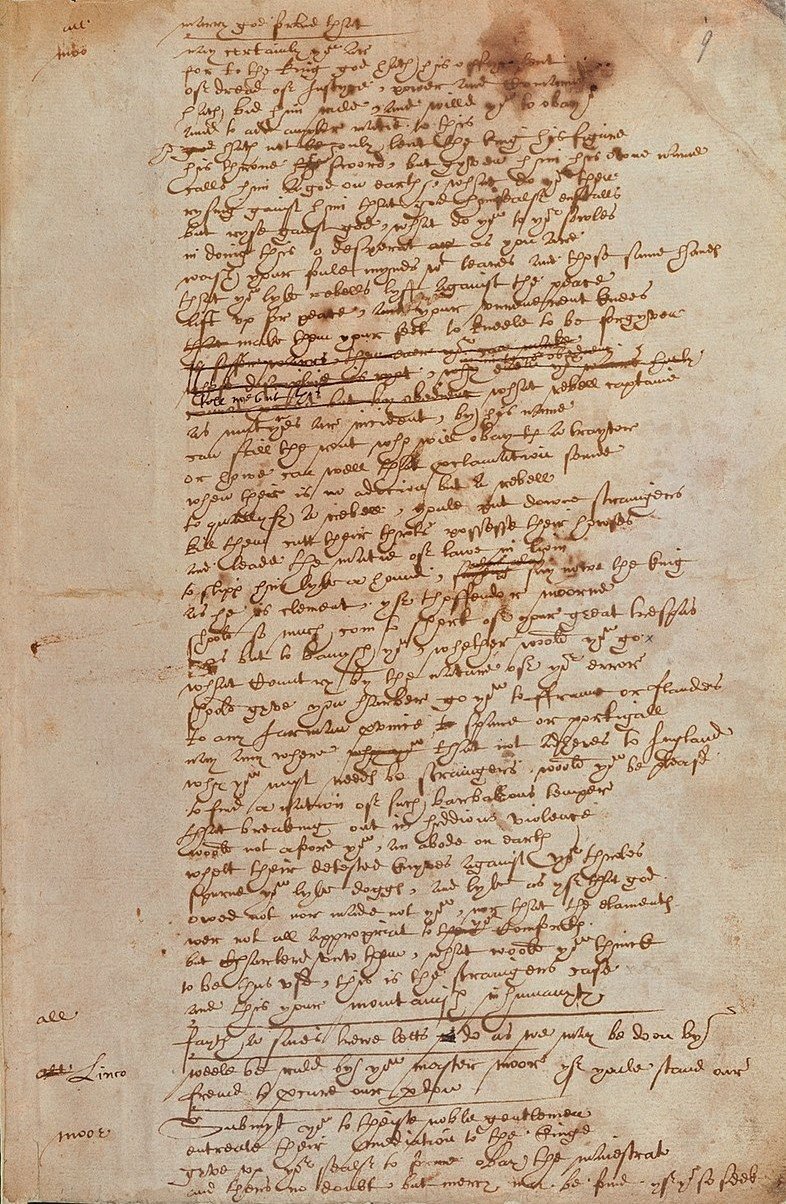
The complex manuscript of Sir Thomas More was produced in a literary workshop in a process that saw the hands of various scribes and copyists as it evolved over a period of many years which accounts to some extent for its complicated state. The so-called Original Text comprising thirteen leaves is a fair copy or transcription of his manuscript (‘foul papers’) or a copy of the complete play as it was initially conceived. The Additions some directly dictated by Bacon to his various scribes and the copyists working from earlier drafts required later revisions and amendments and other forms of authorial and editorial intervention. Some aspects of the seemingly impenetrable and intractable problems the manuscript gives rise to may never be fully or satisfactorily be resolved. The Stratfordian authorities erroneously maintain that Shakespeare’s hand is the same or probably the same as the so-called ‘Hand D’ in the manuscript of the play Sir Thomas More based purely upon the six disputed and widely different signatures of Shakspere of Stratford.
Most importantly, however, more than four hundred years after its original composition the overwhelming and irrefutable evidence confirms beyond any doubt that Sir Thomas More is a Shakespeare play and was written by Francis Bacon.
For more information:
READ PAPER WATCH VIDEO WATCH 1 MINUTE TRAILER VIDEO
6. The Shakespeare First Folio 1623
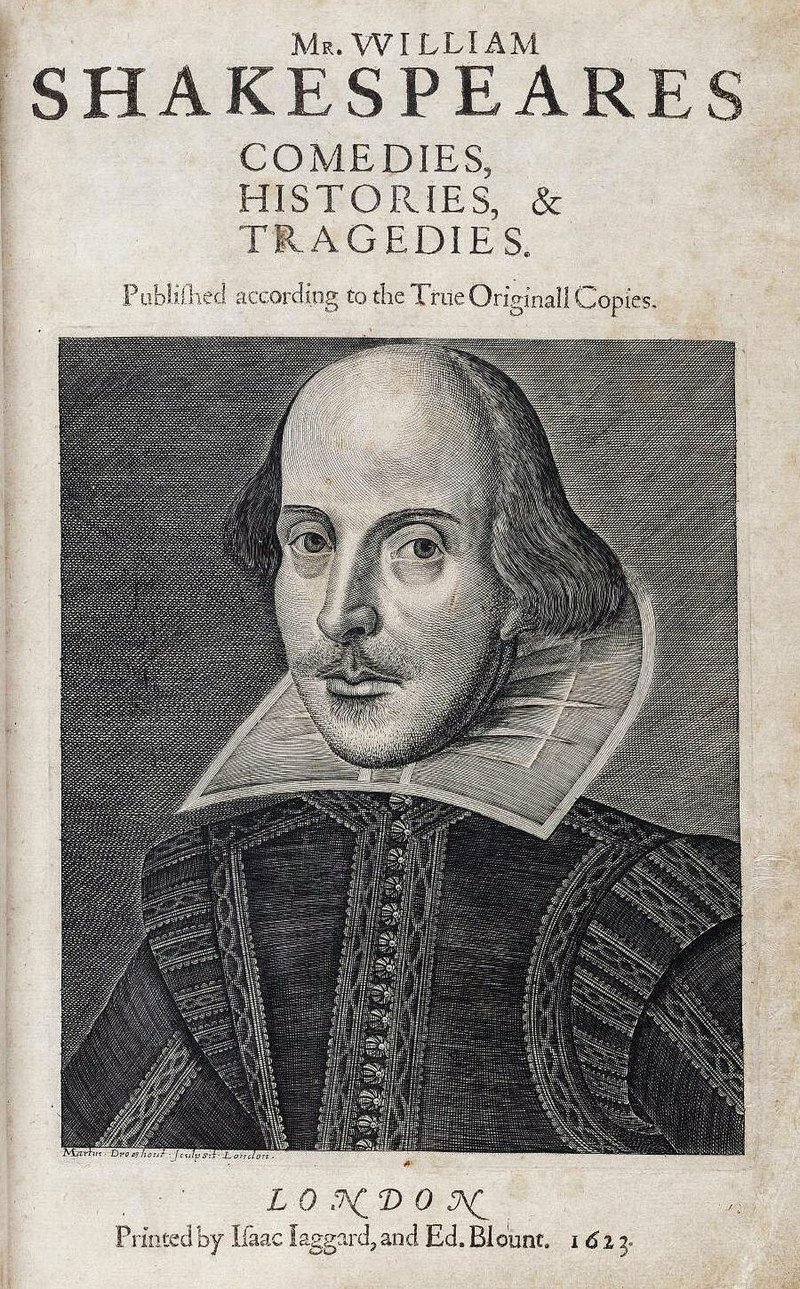
On 8th November 1623 Edward Blount and Isaac Jaggard entered on the Stationers’ Register sixteen Shakespeare plays which had not been previously published. Another twenty previously published plays were added giving a total of thirty-six dramas in the First Folio therein divided into Comedies, Histories and Tragedies, in an enormous volume of more than nine hundred pages, representing the greatest secular publication in the history of English literature.
On its 400th anniversary a recent work entitled The 1623 Shakespeare First Folio: A Baconian-Rosicrucian-Freemasonic Illusion uncovers and reveals unknown and untold secrets about the greatest work of literature in the history of humankind. For the first time, it brings forth the hidden connections of its author Francis Bacon and his Rosicrucian-Freemasonry Brotherhood with all the key members involved in its production, printing, and publication. His hidden relationships with its printers William and Isaac Jaggard and other members of the First Folio consortium, John Smethwick, William Aspley, and its publisher Edward Blount.
Its dedicatee William Herbert, Earl of Pembroke was at the time of its dedication Grand Master of England, one of half of the ‘Incomparable Paire Of Brethren’, with his brother Philip Herbert, Earl of Montgomery, whose joint open and hidden relationships with Bacon went back decades. The other critical member in the production of the 1623 First Folio was its editor and contributor of its two verses Ben Jonson who at the time the First Folio was making its way through the Jaggard printing presses was living with Bacon at Gorhambury, where he was at the heart of the secret plans for bringing together this vast and complex enterprise.
Contrary to common knowledge Francis Bacon and Ben Jonson had a very close personal and professional friendship. Bacon was described by Jonson as, ‘One of the greatest men, and most worthy of admiration’, and in his verse to mark his 60th birthday, he described him as his ‘king’ and said ‘Thou stand'st as if some mystery thou didst!’, hinting there was much that was hidden about Francis Bacon and his life.
Many people are unsure as to whether the two men even knew each other at all, let alone had a close, personal and professional relationship that went back many years. Some commentators put forward Ben Jonson as the corroborating link that proves the man from Stratford wrote the plays. And here lies the rub. Ben Jonson will be forever connected with the Shakespeare First Folio which is why Bacon being a close personal friend of his presents a very real problem to orthodox scholars regarding the Shakespeare authorship.
In the First Folio ‘ To the memory of my beloued, The Avthor Mr. William Shakespeare’ Jonson describes Shakespeare as follows:
Leave thee alone, for the comparison
Of all, that insolent Greece, or haughtie Rome
sent forth, or since did from their ashes come.
In his posthumously published meditations Timber: Or, Discoveries Jonson again writes of his friend Bacon by repeating the wording he used for him in his verse prefixed to the Shakespeare First Folio:
He [Bacon], who hath fill’d up all numbers; and perform’d that in our tongue, which may be compar’d, or preferr’d either to insolent Greece, or haughty Rome.
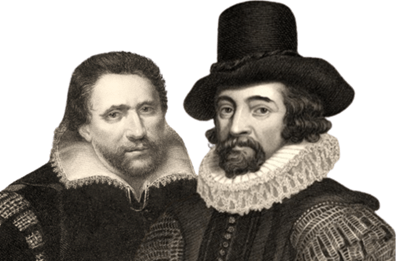
In his Timber, or, Discoveries, Jonson reveals the depth of his friendship with Bacon:
Jonson on Bacon’s Humour and Captivating Oratory:
‘Yet there happened in my time one noble speaker who was full of gravity in his speaking; his language, where he could spare or pass by a jest, was nobly censorious. No man ever spake more neatly, more presly, more weightily, or suffered less emptiness, less idleness, in what he uttered. . .His hearers could not cough, or look aside from him, without loss. He commanded where he spoke, and had his judges angry and pleased at his devotion. No man had their affections more in his power. The fear of every man that heard him was lest he should make an end.’
Jonson on Bacon’s Greatness:
‘My conceit of his person was never increased toward him by his place or honors. But I have and do reverence him for the greatness that was only proper to himself, in that he seemed to me ever, by his work, one of the greatest men, and most worthy of admiration, that had been in many ages. In his adversity I ever prayed that God would give him strength; for greatness he could not want.’
Jonson on Bacon’s Supremacy as a Dramatist and Poet:
‘he who hath filled up all numbers, and performed that in our tongue which may be compared or preferred either to insolent Greece or haughty Rome. In short, within his view, and about his times, were all the wits born that could honor a language or help study. Now things daily fall, wits grow downward, and eloquence grows backward; so that he may be named and stand as the mark and acme of our language.’
For more information:
READ PAPER WATCH VIDEO WATCH 1 MINUTE TRAILER
7. The Memoriae Verses 1626

In 1626 in the months following the death of Francis Bacon to the world his trusted chaplain Dr William Rawley gathered together and published a commemorative work in his honour. The Memoriae Honoratissimi Domini Francisci, Baronis De Vervlamio, Vice-Comitis Sancti Albani Sacrum (sometimes known as the Manes Verulamiani) is a rare volume and contains thirty-two Latin verses in praise of Bacon that portray him as a secret supreme poet and dramatist, and writer of comedies and tragedies under the pseudonym of Shakespeare.
The Latin verses are saturated in classical mythology with many enigmatic associations and links. In them Bacon is referred to many times as Apollo leader of the muses, Pallas Athena Goddess of wisdom and shaker of the spear from where he took his pseudonym and as a writer of comedies and tragedies.
In the final elegy Bacon’s friend, the poet and dramatist Thomas Randolph, one of the ‘sons’ of Ben Jonson, refers to Bacon as Quirinus (Spearman) and Minerva (Pallas Athena Shaker of the Spear), strikingly pointing to the fact that Bacon is the supreme poet and dramatist, Shakespeare.
For more information: